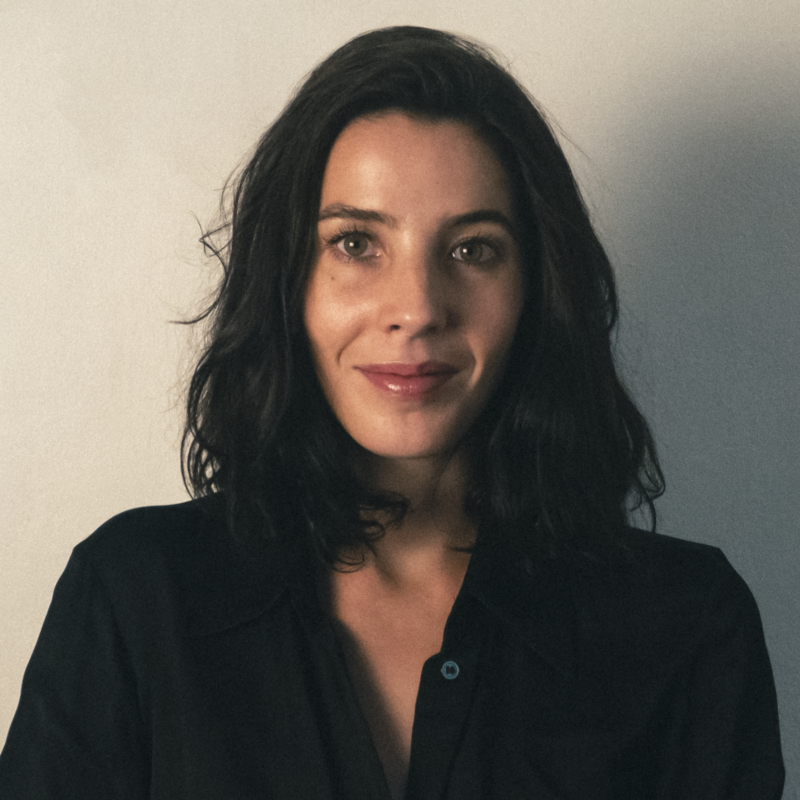
Alexandra Colombier Vanijaka
Research Fellow
PhD candidate, University of Le Havre Normandy
Biography
Alexandra Colombier Vanijaka is a researcher and lecturer in Information and Communication Sciences whose work sits at the intersection of journalism, digital media, platforms, and political communication. Her research has focused particularly on Thailand and Southeast Asia, examining how journalists, political actors, audiences, and online communities navigate an increasingly platformised media environment.
Her doctoral research at Université Le Havre Normandie (CNRS UMR 6266 IDEES) examined the practices and challenges of Thai political journalists during the 2023 general election. Her broader work has explored online political media, TikTok content production, digital footprints, political fandom, and the role of digital platforms in shaping political communication. She has also worked with the TikTok and YouTube APIs and with computational and visual methods for digital research. Her recent publications include work on Thailand’s online political media landscape and Thai TikTok content production.
Alongside her academic work, Alexandra has experience in digital communication, editorial strategy, content production, and building bridges between academic and non-academic audiences. She is particularly interested in how research can inform the people and institutions shaping the media environment, and in developing practical ways to make rigorous knowledge more accessible and useful.
At the Public Tech Media Lab, she hopes to explore how journalism is being defined and practiced in a rapidly changing technological environment. She is particularly interested in what journalism means at a time when its boundaries are increasingly blurred: between professional and non-professional actors, newsrooms and platforms, journalists and creators, and human and AI-assisted forms of content production. She is especially interested in how these questions are shaped by different political, cultural, and media contexts, including those outside Western media systems.
She also wants to explore the tools and technologies increasingly used in journalistic work, and how these tools may shape what journalists do, how they produce and distribute news, and how journalism itself is understood. More broadly, her work examines the relationship between technology, journalism, and democracy, with a particular interest in bringing perspectives from Southeast Asia and other non-Western contexts into debates that are often framed primarily through Western media systems.